When I first started this blog, I wasn’t quite sure what all I would write about. Since I’m still a novice myself when it comes to art, I don’t have too much experience to share. So anything that I think I have knowledge-wise, I was really hoping to spread out. So, in the meantime, I thought about sharing some simple tutorials. For the first one, I thought I’d do a simple tree. (Admittedly, this is one I posted on YouTube a while back, so it’s not brand new, but I’ll be working on more in the future.) YouTube Video Link: https://youtube.com/shorts/2YYe4FkL76I
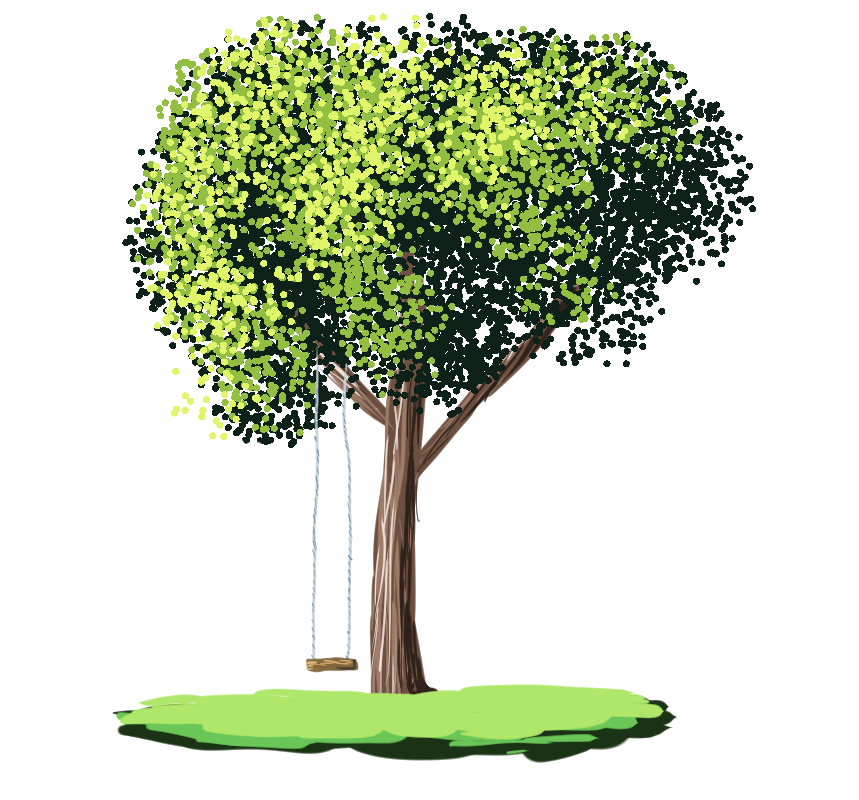
Before I begin, I do want to mention that I painted this tree digitally. However, if you wanted to create it on a traditional canvas with paint, I think it still might be doable. You might just have to come up with a creative way to do the leaves. (One method might be to use a wad of cotton swabs.) Now, on to the tutorial.
The Tutorial:
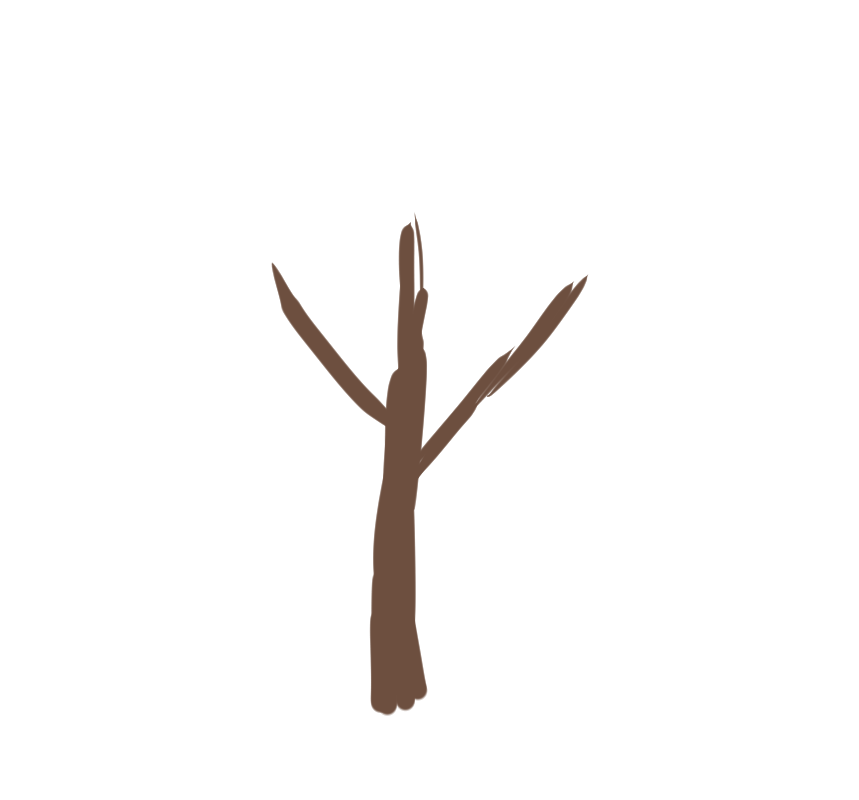
Step 1: First, paint a tree trunk. If you’re going to include the rope swing, be sure to include some branches for the rope to sit on. Also, try to make sure that the base of the tree, as well as the limbs, are slightly larger than their tops, or it may not look right.
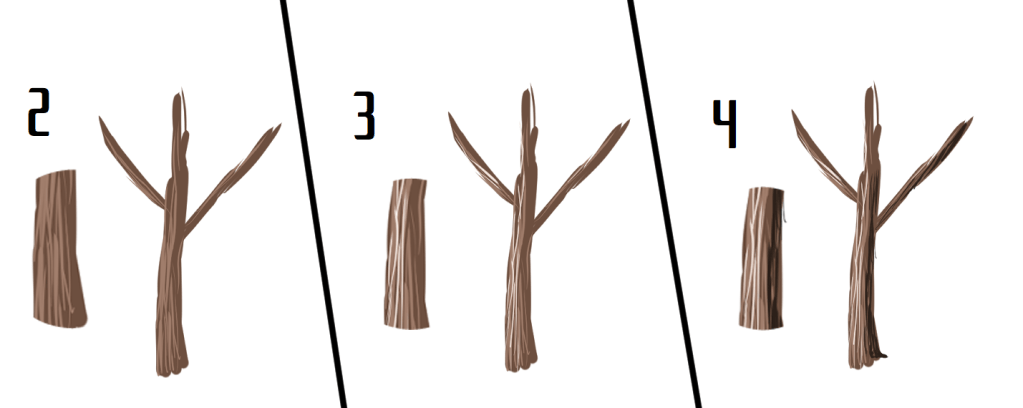
Step 2-4: The next step is to highlight the tree. For this, decide which side you want the light to be hitting. Then take the same shade you used for the trunk, and lighten it. With this, paint some vertical, disconnected lines sprawling up and down the light side of the tree. For step three, take the same color that was used for the previous step and lighten it further until it’s almost white. Use this to highlight the very edge of the light side of the tree. For step four, take a darker shade of the trunk’s base color, and paint some vertical, disconnected lines on the shadow side. Remember to paint a bit of highlight on the limbs. Also, be sure to leave the limb on the shadow side without much highlight, as it naturally wouldn’t receive much.
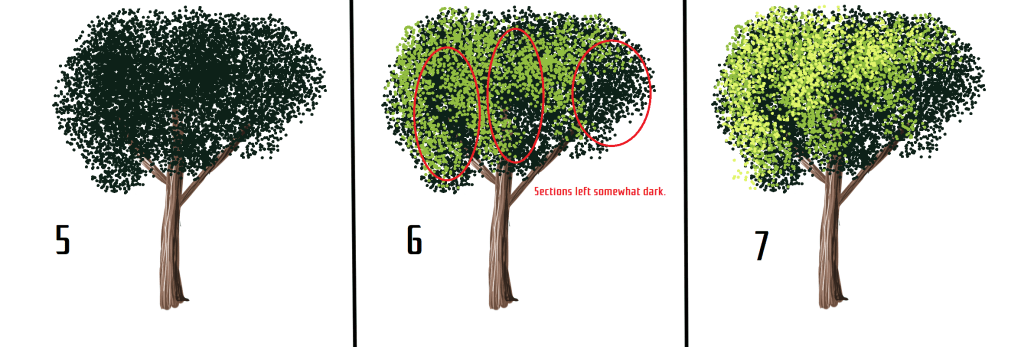
Step 5-7: The fifth step is to paint the leaves. On the digital painting software I used, I did this by using an air-brush type tool. In theory, you could probably just dab a bunch of dots to get a similar effect. Or if you’re painting on a canvas, try bundling cotton swabs together and using the tips to dab on the leaves. For the base layer, use a green that’s quite dark. And try to avoid painting a perfect circular shape to ensure the tree looks natural. Once this is done, the next step is to pick a light greenish color and go over the side where sunlight would be hitting. Be careful with this step- try to layer it on. If you look closely at the example, you’ll notice there’s some dark spaces left in between the highlights. Once you’ve done that, lighten the highlight color again. This time you may want to make it a bit more yellow. With this, highlight just the edges of the other leaf highlights. Just be careful that you don’t add too much that you cover your original highlights.
Step 8-9: Now it’s time to paint the ropes for the swing. When you’re painting the ropes, try to paint the entirety of each rope with a single stroke, else they might look like they’re cut in multiple pieces. After you’ve painted the ropes, you can add a little bit of a braided texture by using a slightly darker color and adding some diagonal strokes as shown in the example.

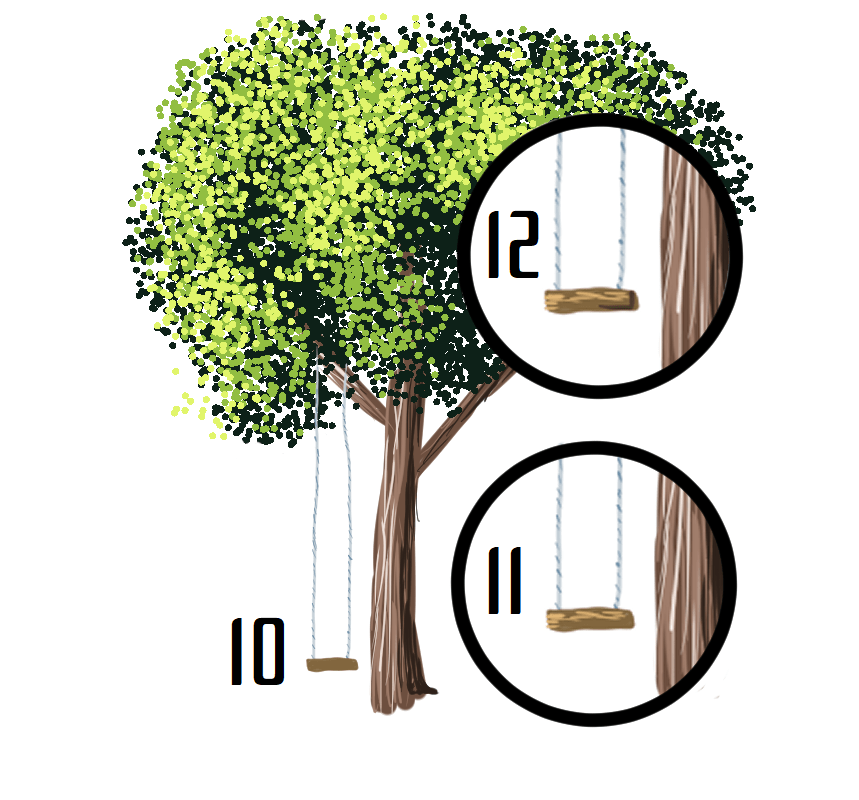
Steps 10-12: For the swing, decide what color you want it to be, and paint a small rectangle for the seat. Then, to add some texture, lighten the color you just used for the swing, and paint some disconnected horizontal lines. Focus these lines on the side where sunlight would be hitting. Last, for the swing, make a much darker version of the swing’s base color, and use this to paint just the edge of the corner to indicate a shadow.
Steps 13-15: Now for the last bit. For this, prepare three shades of green: a dark, a medium, and a light tint. Paint a layer of the darkest first, then the medium tint over that, and then the light. You can cover up the stump of the tree with this a bit if you feel it’s uneven and want to fix it. And with this, you’re pretty much done. If you want to add some blades of grass, just pull up a few strings of paint. But be sure to use the lightest color- as it may not look right if the blades of grass are darker than the plain they’re resting on.

I hope you liked this tutorial! I do plan on making more, so if you like what you see- be sure to check back every now and then!
 ArtV779
Leave a comment