
Getting Started Making Art:
I’m sitting here in my chair with a sketch pad, yet I can’t seem to get myself to pick it up. I’ve had aspirations of being an artist for years, but I’ve never had the drive to get serious about it. I see the finish line I want to cross, but I hesitate at the prospect of the journey to get to it. Maybe you’re like me, you want to be an artist, but you’re struggling to get started. For me, part of that difficulty comes from loving the finished piece more than the actual process. And starting out, this can be a major problem, especially if you’re expecting a masterpiece right out of the gate. For instance, if you don’t know what you’re doing, every brushstroke or pen mark can seem to lead you to the verge of disaster. It’s frustrating. So how does one get over this? How does one get started creating art without dreading the process? In my case, I think the answer to this question is a twofold one. First, I need to accept where I’m at as an artist. Two, I need to figure out where I’m going.
Accepting Where You’re At.
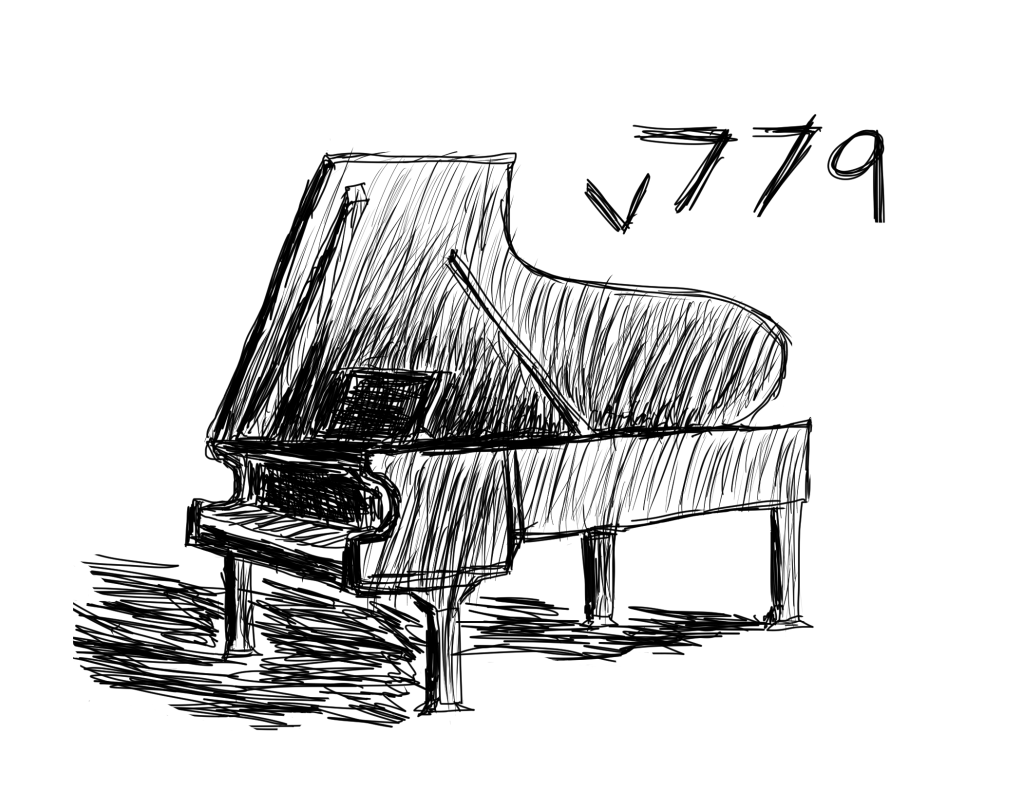
When it comes to creating art, I’m not a professional, and no one should expect to be when they’re starting off. You wouldn’t expect a first-time cyclist to win the Tour de France, so please don’t put the expectations on yourself to paint a masterpiece in your first hour of painting. That’s not to say you can’t find a level of success quickly on your art journey. But expect the success to be simple at first. In my own case, I’ve found that if I’m quite patient and observant, I can draw a few decent sketches based on reference photos. Here’s one I did of a piano.
And here’s one I did of a camera.

I’ve got a few shorts showcasing these on YouTube. They aren’t supposed to be a tutorial, but if you wanted to recreate either of them, I think there’s enough shown that you could give it a go.
Piano: https://youtube.com/shorts/Bink78tCkY4
Camera: https://youtube.com/shorts/hiU9lr2ty-U
If you have some natural talent, you may find yourself able to create a more complex, finished piece. But whatever your starting ability, don’t worry- with enough practice and patience, you’ll eventually be able to create whatever art you want.
So, hear me out when I say this, before you do anything with art, be okay with starting where you’re at. Don’t put overwhelming expectations on yourself. If you’ve never painted before, and you set off to paint a grand landscape, more than likely, you’re going to frustrate yourself trying to get the result you want. And you may give up halfway through the process. Worse yet, you may become so frustrated that you put down the brush with the intent to never pick it up again. Don’t let this happen. Start where you’re at, and be willing to accept whatever art comes with it.
Before you pick up a Brush/Pencil/Pen/(the list goes on)
So given where you’re currently at in your journey as an artist, whether you’ve never painted before, or you’ve created a few pieces that you’re happy with, I highly suggest trying to determine what your aim is in art before you go any farther. There’s probably a few pieces of art that you absolutely love wish you could recreate. Those particular pieces might even be partly responsible for your wanting to become an artist. Use this to focus your learning experience. For instance, say you love pet portraits, and you dream of painting them. If this is the case, I wouldn’t recommend starting your journey by trying to sketch buildings or follow architecture tutorials- even if it seems like it might be easier. For example, if you were to start with something that you aren’t passionate about, then you could burn out quickly. That’s not to say you shouldn’t try sketching a building or following an architecture tutorial. If you want to, do it. It will all be for great practice. Plus, if it’s not something you normally do, a change can help keep you from getting mentally exhausted from drawing a similar subject matter over and over again.

Focus on your interest.
That being said, most generally, if your interest is painting pet portraits, then focus on learning art with that subject matter in mind. Start by sketching simple figures. Don’t try to start by drawing a full portrait with realistic eyes, a mouth, or a nose right at the start. Keep it really basic. Maybe start by drawing different basic animal figures with proper proportions. Or if you want, try drawing a detailed close-up of a single eye. Just keep it really simple, and focus on breaking down your subject matter to learn it one part at a time. If your interest is painting landscapes, start by trying to get the shape of a tree down. As a matter of fact, there are a lot of different ways to paint or draw a tree. As such, make sure you take the time to figure out which style it is you want to focus on, and go for that. As I said before, this doesn’t mean you can’t try something completely different. Perhaps, your end goal is to become a landscape painter, but you really want to try sketching a pet portrait. By all means, give portrait sketching a go. But if it’s not something you have an interest in, don’t force yourself to try it.
Another thing to keep in mind is color. Not only are there different subject matters and styles to master, but you may find yourself particularly fond of a certain color scheme. You may find that you want to create your subject matter in bright abstract colors, or you may prefer more realistic, natural tones. Whatever your preference, be sure to try to focus on incorporating that style of color scheme into your work. Again, you’ll always learn something no matter what style of art you’re attempting. However, if you focus your learning in relation to your primary interest, you should not only get to where you want to go faster, but you’ll probably enjoy the journey that much more.
For myself, I really hope to be able to master a bold, yet expressive type of digital landscape painting. I don’t imagine myself painting seascapes or mountains, but I’d really love to master painting rolling hills and valleys. Color-wise, I favor bright, yet realistic tones. None of this is to say that I’ll never paint a cloudy, softly-colored mountainscape. But, in the end, that’s not where my primary interest lie, so I don’t intend to focus my learning around that style of digital painting.
Get Started.
Once you’ve picked a style of art that you want to focus on- start practicing. That’s not to say you have to spend hours every day doing it. Just start working a half an hour or so at a time. And don’t pressure yourself with any expectations. In my case, I intend to spend most of my time creating art from reference. In this case, when I’m following someone step by step, I feel like I can easily go into autopilot of just replicating everything they do. In some ways, this is very helpful, as it may teach me the basics of creating the shape of a tree, or how to texture that tree. However, if all I ever do is watch tutorials, I feel like I’ll never develop that critical thinking of how to draw something myself. For instance, when you draw from a reference photo without any step-by-step guide, you have to rely on yourself to figure out how to get what you see down on paper. This challenges you to notice the little things and be observant. In comparison, when you’re watching a tutorial, your mind may not be challenged in the same way, as the tutorial is feeding you those details, and how to recreate them. Again, I’m not saying to avoid tutorials. By all means, give them a go- I’ll probably try a few myself. But try not to spend all of your time on them.
Personally, my intent right now is to try to sketch for around thirty minutes a day on weekdays. I may draw more or less, but that’s what I’m going to aim for. Of course, my end goal is to become a digital landscape painter. But for now, sketching is a good start. With it, I won’t have to worry about color, and I can just focus on figuring out how to draw simple things like flowers, trees, or mountains. Of course, I’ll probably become distracted by something else along the way and want to draw it, but that’s fine, as long as it’s something I want to do. If you want to get started making art, I hope something that I’ve said has been helpful. Remember to be okay with starting where you’re at. Then figure out where you want to go, and lay in an achievable plan to get there. It may not happen overnight- but you’ll eventually become the artist you want to be, and hopefully, you’ll learn to love the process it takes to get there.
A Note on Tutorials.
If you’re really keen on trying to paint or draw something complex right off the bat, you can have some success if you follow some step-by-step tutorials. That being said, as someone who’s tried following tutorials before, don’t expect to exactly replicate the finished piece. There are a few reasons for this. One, more than likely, you won’t be using the exact same art supplies. In this case, you may be using a brush that’s more or less stiff than the one used in the tutorial that you’re following. If you are, you may find that it doesn’t quite replicate the brushstrokes, especially if a lot of tapping is involved. The same thing goes for paint. If you’re using a paint that’s thinner or thicker than that used in the tutorial, you may have trouble blending color or applying an even coat.
Even if you have the exact same supplies as those depicted in the tutorial, there’s still a chance you won’t quite be able to replicate what you see. In this case, you might struggle to replicate the micro gestures and techniques used in the tutorial to shade or create certain effects. That’s not to say you won’t come very close, so don’t keep yourself from giving it a try. Just kind in mind it might not turn out just right at first, but with practice and careful observation, you’ll soon be able to replicate the techniques shown in whatever tutorial you’re following. Also, something worth noting, you may find tutorials over certain art mediums easier to follow than others. For instance, oil paint tutorials may require you to blend color more on the canvas in comparison to other mediums in which you’re primarily layering colors on top of each other.
 ArtV779
Leave a comment